There are two ways to end up in the chair. You can wander in off Chapel Street on a free afternoon and ask what an artist can do for you there and then — a walk-in. Or you can plan it: send through your idea, talk it over, and book a session for a date that suits. Both are good ways to get tattooed, and neither is the “right” one. The better question is which suits the piece you have in mind, and the kind of day you want around it. Here is how to think it through.
What a walk-in actually is
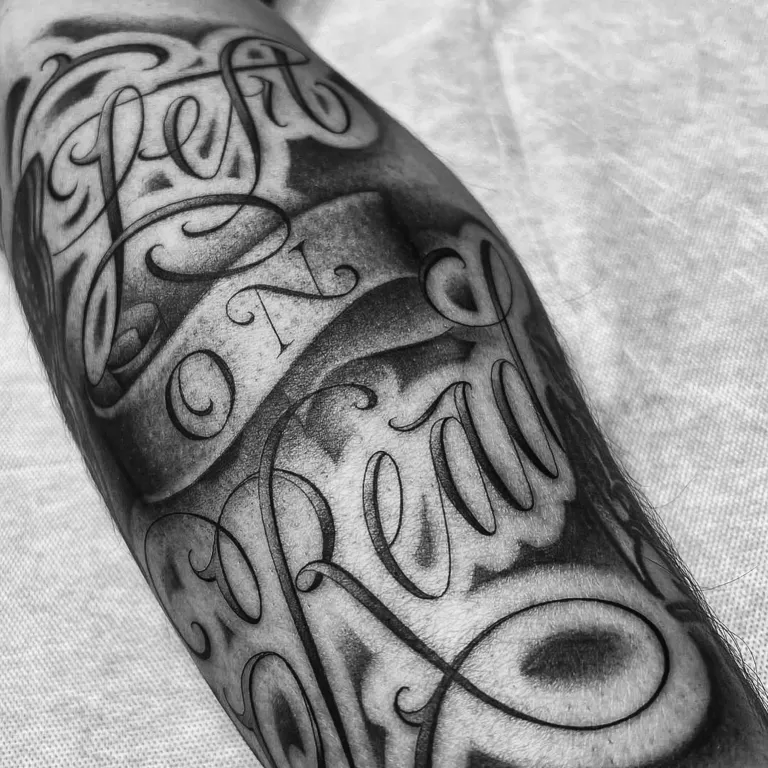
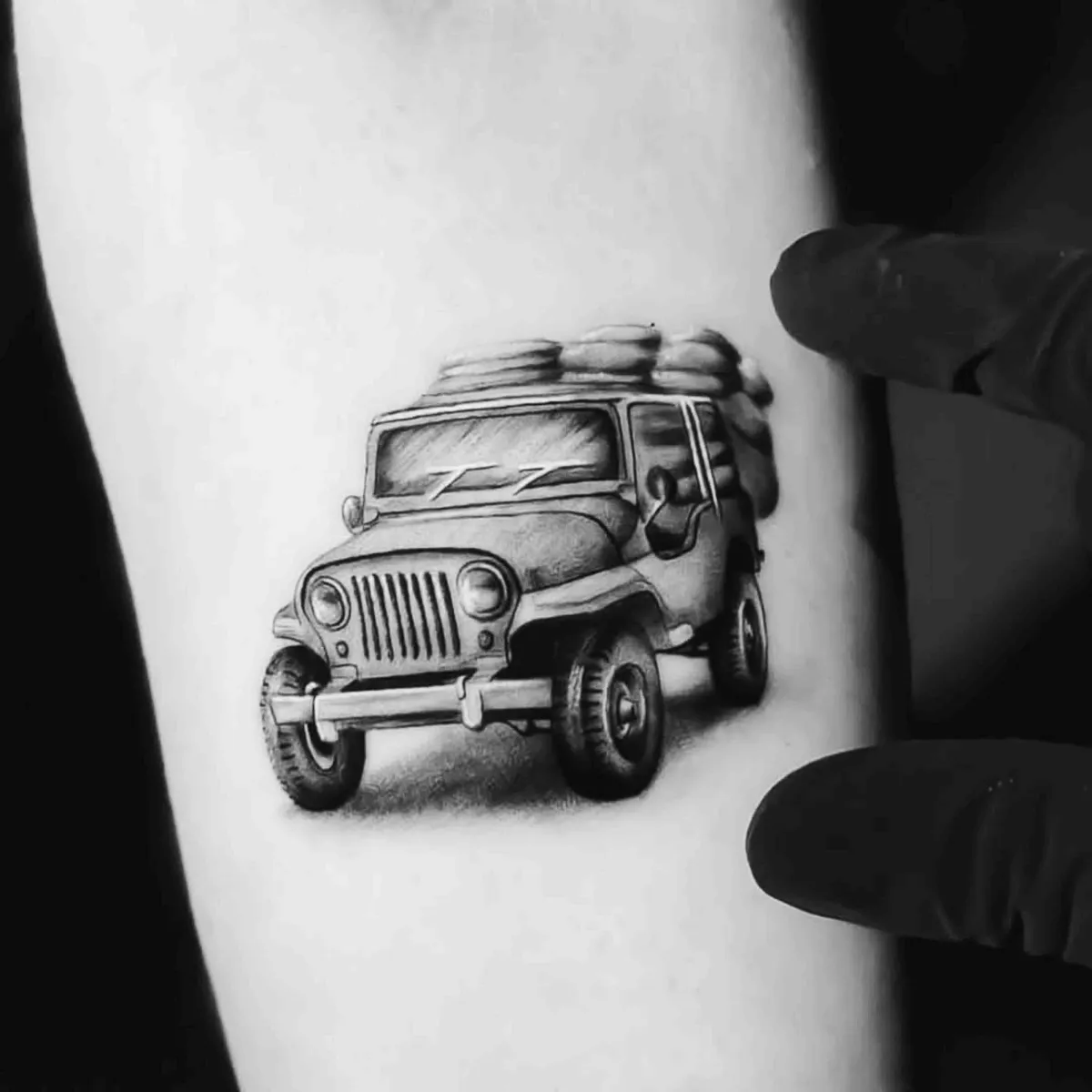
A walk-in is exactly what it sounds like — you arrive without an appointment and see whether an artist has the time and the inclination to tattoo you that day. It works best for pieces that are smaller, simpler, and don’t need a long lead-up: a piece of flash off the wall, a clean bit of lettering, a small symbol or a fine-line design that an artist can draw up on the spot. Open seven days, with the studio running from late morning til late, we keep room in the week for exactly this kind of spontaneity.
The appeal is the immediacy. You feel the urge, you act on it, and you walk out with the tattoo the same day — no waiting, no diary entry, no building it up in your head for a fortnight. For a lot of people that energy is half the point. The trade-off is simply availability: a walk-in only happens if an artist is free when you turn up, so it is never guaranteed.
A walk-in is a conversation that starts the moment you step through the door — quick, honest, and entirely about what we can do today.
What a booked appointment gives you
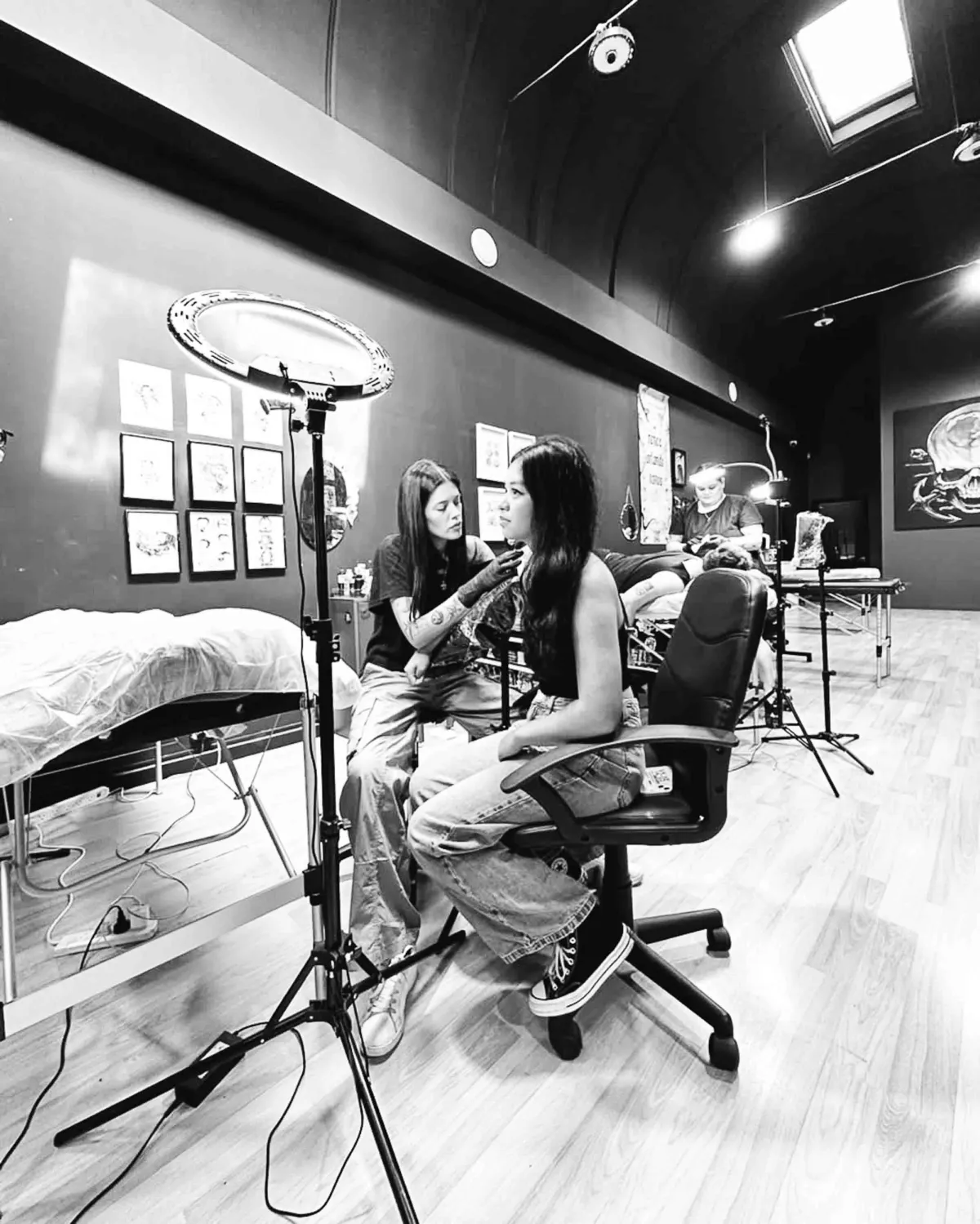
A booked appointment is the considered route. You reach out first, share your reference and your story, and we set aside a block of time specifically for you. Before the day arrives there is usually a consultation — in person or over a message — where size, placement and the look of the piece all get settled. By the time you sit down, the artist has drawn up your design and the session is yours alone.
That preparation is what makes booking the better choice for anything with weight to it. A custom piece, a larger design, a portrait, a cover-up, the first panel of a sleeve — these all benefit from an artist having time to draw, to match a stencil to your body, and to give the work the attention it deserves. Booking also means you choose the day, you know roughly how long to set aside, and you can fit it neatly around work and life rather than hoping the timing falls your way.
Choosing by the piece you want
The single most useful filter is the tattoo itself. If the design is small, ready to go, and doesn’t need bespoke drawing, a walk-in is a fine and often lovely way to get it done. If the design is personal, detailed, large, or needs to be drawn up from your idea, book it. A rushed custom piece serves nobody — the artist wants the room to do it properly, and you want to live with the result for life.
If you are still working out what you actually want, that points toward booking too, because the consultation is where a half-formed idea becomes a real design. Our guides on choosing placement and finding your style are a good place to start narrowing things down before you reach out.
Small and ready, walk in. Personal and considered, book it — and give the art the time it asks for.
How to give a walk-in the best shot
A walk-in is never promised, but you can stack the odds. Quieter times of the week tend to have more give in them than a busy weekend, so an early-week afternoon is often your friend. A quick phone call before you set off — (03) 9510 1892 — saves a wasted trip; we can tell you on the spot whether someone has space and roughly how long the wait might be.
Come prepared, too. Have a clear reference on your phone, know the placement you have in mind, and arrive fed and hydrated as you would for any session — a walk-in still needs you in good shape for the chair. The clearer your idea when you walk in, the faster an artist can say yes and get started. And if there is a short wait, Chapel Street is a pleasant place to fill twenty minutes.
How booking works at Full Moon
Booking with us is straightforward. Send through your idea with any reference images, and tell us the rough size and where on the body it is going. From there we talk it over, sort out a consultation if the piece calls for one, and lock in a date. For larger or custom work a deposit holds the session and the artist’s drawing time — in this concept demo that step is simulated, with no card charged, and a real studio confirms every booking before it is final.
The pay-off is a session that runs smoothly from the moment you arrive: your design ready, the time set aside, nothing rushed. If you are new to all this, our piece on what to expect at a consultation walks through the conversation step by step, so the first message feels easy to send.
Can’t decide? Start with a message
If you are torn, there is a simple middle path: describe your idea to us and let the piece decide. Send it through, and we will tell you honestly whether it suits a quick walk-in or deserves a booked session with proper drawing time. Often the answer is obvious the moment we see the reference. You can also see a design on your own skin first with our try-on preview — a relaxed way to test placement and scale before you commit to either route.
Whichever way you come to us, the work itself is the same: considered, clean, and built to last. A walk-in just means we have that conversation today; a booking means we have it ahead of time. Either way, look after the tattoo once it is done — follow the aftercare your artist gives you, and remember this is general guidance, not medical advice. If a healing tattoo ever shows signs of infection such as spreading redness, heat, swelling or pus, see a doctor.