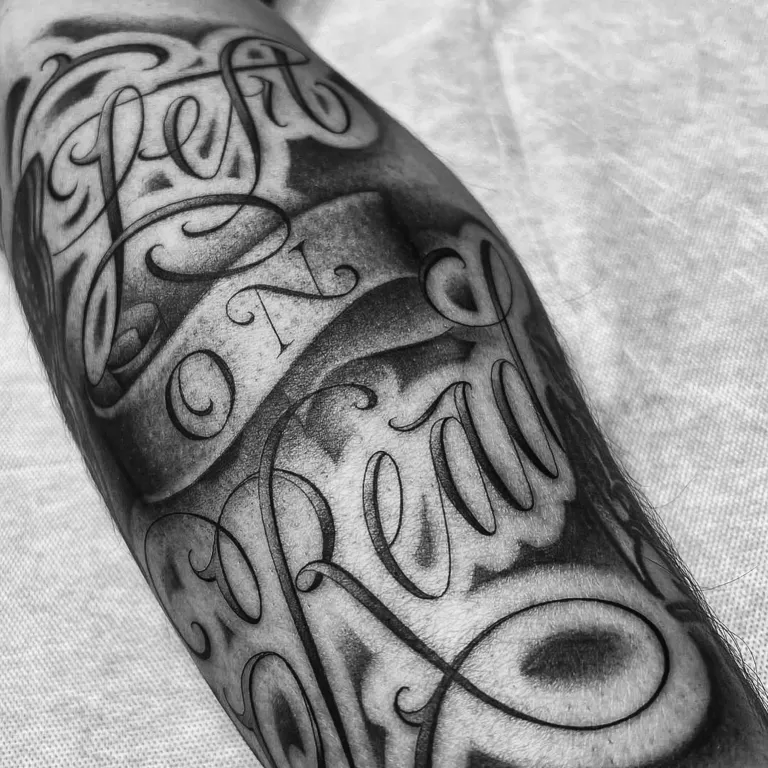
A sleeve is not a tattoo. It is a body of work that happens to live on one arm — a collection of pieces, linework and shading that, done well, reads as a single composition rather than a scrapbook of separate ideas. That distinction is the whole game. The difference between a sleeve that looks designed and one that looks accumulated comes down almost entirely to planning, and to the patience to let it take the time it needs. Here is how we think about building one, start to finish.
Start with a theme, not a list of tattoos
The most common way a sleeve goes sideways is starting with a wishlist — a koi here, a portrait there, a quote on the inner arm — and trying to fit them all on. The result is busy, crowded, and never quite settles. A sleeve that works begins one level up: with a theme, a mood, or a story that everything else can hang from.
That theme can be loose. It might be a subject (botanicals, the ocean, native Australian flora and fauna), a style (blackwork, fine line, black-and-grey realism), a palette, or simply a feeling. It does not need to be literal or explained to anyone. What it gives you is a rule for what belongs and what does not — so when an idea comes along mid-build, you have a way to judge whether it strengthens the whole or just clutters it.
A sleeve that works is one idea told across an arm — not a dozen ideas competing for the same skin.
Pick one style and one artist
A sleeve is a long relationship. It is far easier to keep cohesive when one artist holds the whole vision and works in one consistent style. Mixing styles — a hyper-realistic portrait next to bold traditional next to delicate fine line — rarely flows, because each style carries its own weight, line thickness and way of ageing. Sat side by side, they fight.
Choosing your artist early, before any ink goes in, means the composition can be planned as a whole from the first session. They will think about how the pieces connect, where the eye travels, and how it will all sit once the arm is covered. If you already have a tattoo or two on the arm, a good artist will plan around them — or talk you through honestly whether they can be woven in. Browse our gallery of real work to find a hand whose style genuinely speaks to you; that fit matters more for a sleeve than for any single piece.
Map the whole arm before the first session
Before the needle touches skin, the arm gets mapped. This is the stage that separates a planned sleeve from a patchwork one. Your artist looks at the full canvas — the way the arm curves, where the muscle sits, how it moves — and roughs out where the major elements will live and how negative space will breathe between them.
That breathing room is not wasted space; it is what gives the eye somewhere to rest and lets each element read. A sleeve crammed corner to corner with no space quickly becomes a dark, muddy blur, especially as it ages and the lines soften. The map does not have to be a finished design of every square centimetre — sleeves often evolve as they grow — but the bones, the flow and the major focal points are set early so nothing later has to be forced in.
Build it in a sensible order
Sleeves are built in sessions, usually over months, and the order is deliberate. Most artists start with the largest, most prominent piece — the centrepiece the rest will orbit — and work outward from there, adding supporting elements, then the connective linework and background that tie everything together into one flowing whole.
It can feel disjointed in the middle, when you have a couple of strong pieces and bare skin between them. Trust the plan. The connecting work and background — the filler, in the kindest sense — is what turns separate tattoos into a sleeve, and it usually comes toward the end. Resist the urge to fill every gap with a new standalone idea before the original composition is finished; that is exactly how a planned sleeve drifts back into a scrapbook.
Trust the order. The bare skin between your first pieces is where the sleeve gets made, not a gap to panic-fill.
Plan for time, cost and healing
A sleeve is a commitment of time and money, and it pays to go in clear-eyed. It is built across multiple sessions — often several hours each, spread weeks apart — because skin needs to fully heal between sittings before fresh work goes next to it. Rushing that does the tattoo no favours. As a guide only, large work and sleeves at Full Moon start from around $800*, with the final figure set by your artist based on size, detail and the hours involved.
Spreading a sleeve out is a feature, not a compromise. It lets you pace the cost, recover properly between sessions, and live with the work as it grows — which often shapes the later pieces for the better. Each session also has its own aftercare; healing a section well before the next sitting keeps the whole sleeve looking crisp. Our aftercare guide walks through caring for fresh work as you go.
A few things to get right early
A handful of decisions are worth nailing down before you start, because they are hard to undo once the arm is underway:
- Where it stops. Decide your boundaries — full sleeve to the wrist, half sleeve to the elbow, whether it wraps onto the hand. This shapes the whole composition.
- The hands and visible edges. Hands, wrists and the inner forearm are highly visible; think about work, and know these spots fade faster and need touch-ups sooner.
- Colour or black-and-grey. Settle the palette early so it stays consistent across every session. Our guide to colour versus black-and-grey can help you decide.
- Placement of focal points. The outer arm reads more easily than the inner; put the pieces that matter most where they will be seen.
- Room to grow. Leave the plan a little open. The best sleeves breathe and evolve rather than being locked rigid from day one.
Come in for a consultation first
None of this has to be solved alone. The right first step for a sleeve is a proper consultation, where you sit down with your artist, share your references and the theme you are drawn to, and start mapping it together. That conversation is where a vague idea becomes a real plan — and where an experienced artist will steer you away from the choices that look good on paper but age poorly on skin. If you are unsure how that works, our guide to what to expect at a consultation sets the scene.
A sleeve is one of the most rewarding projects you can take on — a single, cohesive work that grows with you over time. Give it the patience and planning it deserves and it will reward you for life. As always, this is general guidance; your artist will tailor the plan to your arm, your skin and your idea. And while healing between sessions, if any section shows signs of infection such as spreading redness, heat, swelling or pus, see a doctor.