
A tattoo is permanent, but it is not frozen. It lives on skin, and skin is a living organ that grows, stretches, dries, sees sun and slowly changes across a lifetime. The ink you carry sits a fraction of a millimetre deep, held in place by your own body — so as that body changes, so, gently, does the art. None of this is cause for worry. A well-made tattoo can look beautiful for decades. But understanding how a tattoo ages helps you make better choices at the design stage and look after it well once it is healed. Here is what actually happens over the years, and the simple things that slow it down.
What actually happens to a tattoo over the years
The image people have of an "old" tattoo — soft, blurred, a little faded — is real, but it is the sum of a few separate, slow processes rather than one dramatic decline. Ink particles are large enough that your immune system cannot easily clear them, which is what makes a tattoo permanent in the first place. Over many years, though, those particles spread microscopically through the surrounding tissue, which is why crisp lines soften and very fine detail can lose its edge.
At the same time the skin above the ink turns over endlessly, the deeper layers lose a little elasticity with age, and cumulative sun exposure breaks down pigment. Add the slow drift of the body itself — weight shifting, muscle changing, skin settling — and you have the gentle, gradual evolution that a tattoo goes through. It is measured in decades, not seasons.
A tattoo does not so much fade as settle — the choices you make at the start decide how gracefully it does it.
Sun, the single biggest factor
If there is one thing that ages a tattoo faster than anything else, it is ultraviolet light. UV breaks down ink pigment in the skin the same way it fades a curtain or a car seat left in the window — and under the Australian sun, that work happens quickly. Sun exposure is the clearest difference between a tattoo that still looks sharp at twenty years and one that has gone flat and grey well before its time.
The remedy is simple and entirely in your hands. Once a tattoo is fully healed, keep it out of harsh sun where you can, and use a high-SPF sunscreen on it any time it is exposed. Make it a habit, not an afterthought — a few seconds of sunscreen across the years is the cheapest insurance a tattoo can have. While a tattoo is still healing, sun is off the table entirely; our guide to protecting a new tattoo from the sun covers that stage in full.
How skin changes age the art
Your skin is the canvas, and a living canvas moves. Over decades it loses a little of its plumpness and elasticity, which can soften the look of a piece. More noticeably, significant changes in body size — weight gain or loss, pregnancy, a serious change in muscle — stretch and shift the skin, and the tattoo stretches with it. A design across the stomach, for instance, will move with that part of the body over a lifetime.
This is not a reason to avoid those areas, only a reason to choose with open eyes. A good artist will factor the nature of a placement into the design from the start. It is also part of why placement is worth real thought rather than a snap decision — our piece on choosing the right placement goes into how different parts of the body wear over time.
Why the design itself decides how well it ages
More than care, more even than sun, the biggest predictor of how a tattoo will look in twenty years is how it was designed in the first place. This is the single most important thing to take from this article, because it is decided before the needle ever touches skin.
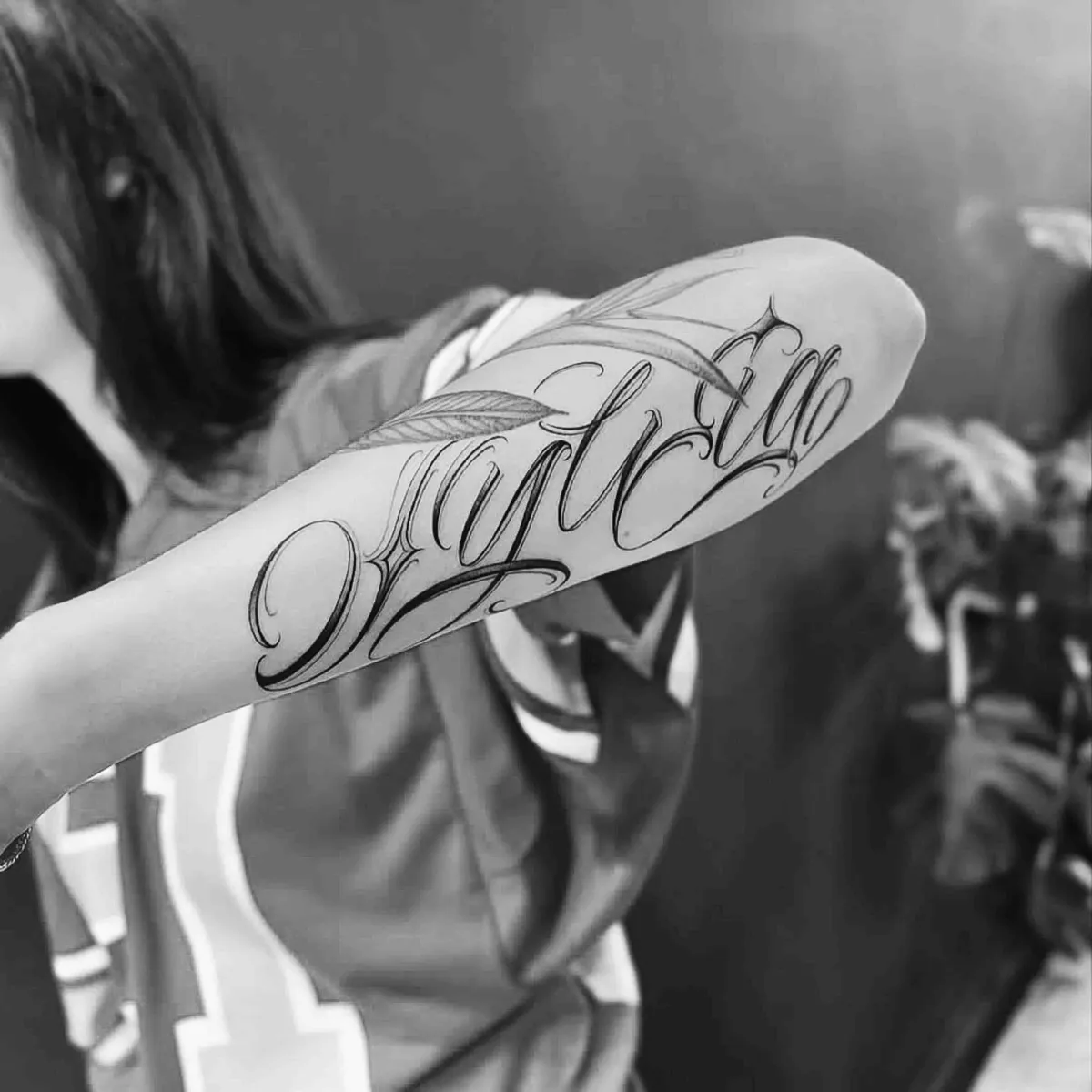
Bold holds up. Solid lines, strong contrast and enough breathing room between elements give a tattoo the structure to stay legible as it softens with age. Extremely fine, densely packed detail — hair-thin lines crowded together, tiny lettering, delicate gradients with no contrast — reads beautifully on day one but has the least margin as the years blur it. None of this means fine-line work is a poor choice; it simply ages differently, and a thoughtful artist designs it to last rather than to dazzle only at the unveiling.
- Clean, confident linework with space around it stays readable for the long run.
- Strong contrast keeps a piece from going flat as pigment mellows.
- Sensible scale — not cramming a complex image into a tiny footprint — leaves room for the design to settle.
- A composition that suits the part of the body it sits on moves gracefully with you.
This is exactly the kind of judgement a consultation is for. We take a moment to consider your art — its size, placement and the story behind it — and part of that conversation is building it to last, not just to look good in the first photo.
Bold ages best. The piece that still reads clearly at sixty was designed for sixty on the day it was drawn.
How colour and black-and-grey age differently
Black and grey is, broadly, the most enduring. Black ink is dense and holds its depth well, which is why old black-and-grey work so often still looks strong. Colour can be every bit as long-lived, but different pigments behave differently — deep, saturated tones tend to hold, while very pale or pastel shades, and white highlights in particular, are the first to soften. That is the nature of the pigment, not a flaw in the work.
If you are weighing the two, it is worth understanding how each wears before you decide, rather than after. Our guide to colour versus black-and-grey walks through it. Either way, the same rules apply: protect it from the sun and keep the skin in good condition, and good colour will reward you for years.
How to slow it down and keep it sharp
The good news is that the things that keep a tattoo looking its best are unglamorous and easy. None of them ask much of you; together they make a real difference across a lifetime.
- Sunscreen, always. A high-SPF over any exposed tattoo is the most effective single thing you can do. Make it routine.
- Keep your skin moisturised and healthy. Well-hydrated, well-cared-for skin holds ink better and looks better. Looking after the skin is looking after the tattoo — see our note on caring for an older tattoo.
- Stay generally well. Hydration, a balanced diet and not smoking all support healthy skin, and healthy skin keeps a tattoo richer for longer.
- Heal it properly in the first place. How a tattoo settles in its first weeks sets its baseline for life; rushed or neglected healing shows years later.
- Book a touch-up if it ever needs one. A small refresh of line or saturation, years down the track, can bring an older piece back to life. It is a normal part of a tattoo's long story, not a sign anything went wrong.
Do these and your tattoo will age the way good art is meant to — gracefully, gathering a little softness and character without losing what made it worth getting. The aim was never to keep it looking brand new forever; it is to keep it looking good for a lifetime, and that is well within reach.
One honest closing note: this is general care advice, not medical guidance. A healthy, healed tattoo simply mellows over time, which is normal. But if a tattoo — new or old — ever shows signs of infection such as spreading redness, heat, swelling or pus, that is not about ageing; see a doctor.